


How to Sleep With Neck Pain
The best way to sleep with neck pain is on your back with proper neck support, preferably using a contoured or cervical pillow.
However, there are also several sleeping positions and pillows you should avoid if you want to prevent waking up with neck pain. Stomach sleeping, for instance, should be avoided entirely, as it forces your neck into rotation for hours. The right pillow, mattress firmness, and sleep posture can make a significant difference (supported by evidence), as we’ll talk about later.
If you’ve been struggling with neck pain for years and found no permanent solution, this guide will show you exactly what you need to change tonight. Alternatively, you can also schedule an appointment immediately at Advanced Spine and Sports Care.
3 Best Practices for Sleeping With Neck Pain 
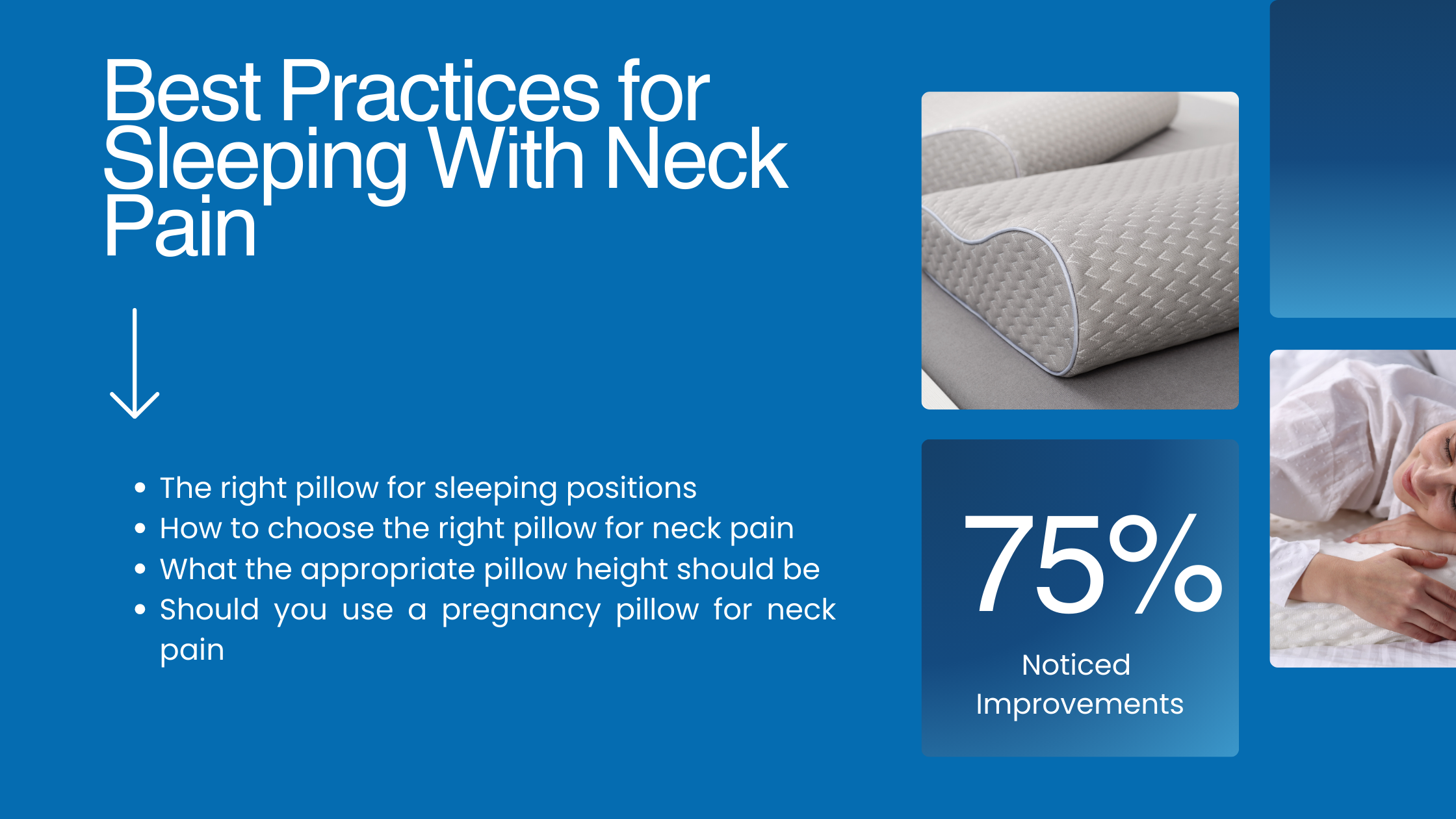
First, we’ll look at a general overview of the 3 best practices for sleeping with neck pain, then dive deeper into:
- The right pillow for sleeping positions
- How to choose the right pillow for neck pain
- What the appropriate pillow height should be
- Should you use a pregnancy pillow for neck pain
Pillow Shape Improves Sleep Quality
Contoured (memory foam) or cervical pillows that support the neck while aligning the head with the spine have been shown to reduce neck pain and improve sleep quality. Studies indicate that pillow shape and height influence neck alignment more significantly than the material alone.
Height and Alignment Are Critical
The right pillow height maintains a neutral cervical spine position during sleep. Research shows this is particularly important for side and back sleepers, with proper height adjustment associated with better neck pain outcomes in clinical trials.
Pillow Material Effects Matter, But Shape Is What Ultimately Counts
While pillow materials like memory foam or latex (rubber or spring) do affect comfort and pain, systematic reviews consistently find that design features, contour and height, are the primary drivers of improvement in neck alignment and pain relief.
Best Pillow Types for Neck Pain
The pillow types listed below on the table were recommended based on clinical trials. This includes patients who suffer from chronic neck pain and experience waking symptoms.
| Pillow Type | Why It Works |
| Cervical/Contour Pillows | Frequently recommended for neck pain due to built-in neck support and varied heights. Many studies report reduced pain and improved sleep when used with proper height adjustment. |
| Rubber/Latex Pillows | Meta-analytic evidence suggests that rubber and latex pillows can reduce neck pain along with waking symptoms. Patients reported better satisfaction in chronic neck pain cases. However, results on sleep quality are mixed. |
| Adjustable-Height Pillows | Some trials report that customizing pillow height to individual neck and shoulder anatomy yields better outcomes than fixed-height pillows, particularly for persistent neck stiffness. This is where pregnancy pillows come in, which we’ll talk more about later. |
How to Choose The Right Sleeping Position for Neck Pain (Pillow to Look For and Height Considerations)
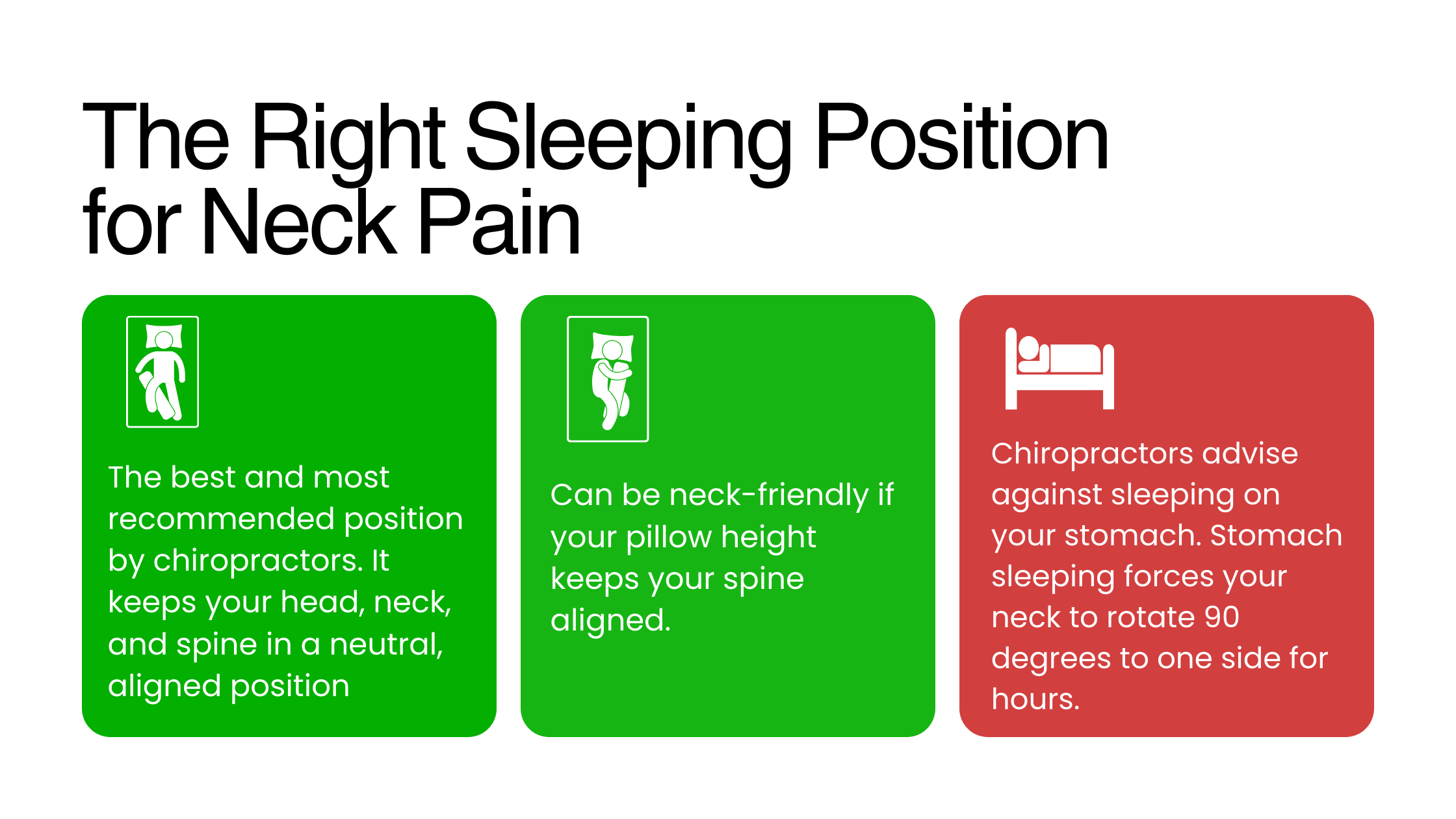
Not all sleeping positions are created equal when it comes to neck health. Here’s how the three main positions stack up:
1. Back Sleeping (Best for Neck Pain)
Why it works: Sleeping on your back is the best and most recommended position by chiropractors. It keeps your head, neck, and spine in a neutral, aligned position. Gravity distributes your weight evenly, reducing pressure on any single point.
How to do it correctly:
- Use a pillow that supports the natural curve of your neck without pushing your head too far forward
- Your head should rest comfortably without your chin tilting toward your chest
- Consider placing a small rolled towel or cervical roll under your neck for additional support
- You can place a pillow under your knees to reduce lower back strain (which can indirectly affect neck tension)
Potential downsides:
Back sleeping can worsen snoring or sleep apnea for some individuals. If this is a concern, consult a chiropractor before changing positions.
What pillow to look for:
A medium-loft contour pillow that supports the neck without pushing the head too far forward.
Height consideration:
The pillow should support the natural neck curve, aligning your cervical spine with the rest of your spine. If your chin pushes toward your chest, the pillow is too high.
2. Side Sleeping (Good for Neck Pain, If Done Correctly)
Why it works: Side sleeping can be neck-friendly if your pillow height keeps your spine aligned. The key is to ensure your head and neck stay level with the rest of your spine, not angled up or down.
How to do it correctly:
- Use a thicker, firmer pillow that fills the space between your shoulder and head
- Your ear, shoulder, and hip should form a straight line when viewed from behind
- Avoid tucking your chin toward your chest or letting your head tilt backward
- Place a pillow between your knees to keep your hips and spine aligned
- Switch sides periodically to avoid overloading one side of your neck
Common mistakes:
Using a pillow that’s too thin (causing your head to drop) or too thick (pushing your head upward) will strain your neck muscles and misalign your cervical spine.
What pillow to look for:
A firmer, contoured pillow that fills the space between your neck and the mattress to keep your head, neck, and spine aligned.
Height consideration:
The pillow should prevent your head from tilting upward or downward excessively. Aim for alignment where your forehead, nose, and sternum form a straight line.
3. Stomach Sleeping (Avoid If You Have Neck Pain)
Why it’s problematic: Chiropractors advise against sleeping on your stomach. Stomach sleeping forces your neck to rotate 90 degrees to one side for hours. This puts excessive strain on the cervical spine, compresses nerves, and keeps neck muscles in a contracted, unnatural position.
What happens:
Over time, stomach sleeping can contribute to chronic neck stiffness, headaches, nerve compression, and even degenerative changes in the cervical spine.
The reality is that stomach sleeping is the worst position for neck health. If neck pain is a recurring issue, transitioning to back or side sleeping is one of the most effective changes you can make.
Pillows for Different Sleeping Positions
| Pillow Type | Best For | Pros | Cons |
| Memory Foam (Contoured) | Back and side sleepers with neck pain | Conforms to your neck’s natural curve; provides consistent support | Can retain heat; may feel too firm initially |
| Cervical Roll | Back sleepers needing extra neck support | Supports the cervical curve; prevents forward head posture | Not ideal for side sleeping |
| Adjustable Loft | People who switch positions or need customizable height | Allows you to add/remove fill to match your needs | Quality varies; cheaper versions lose shape quickly |
| Buckwheat | Side sleepers who want firm, moldable support | Stays cool; can be adjusted by adding/removing hulls | Noisy when shifting positions; heavier than foam |
| Down/Feather | People who prefer soft, traditional pillows | Soft and comfortable | Provides less structural support; flattens over time |
General Guidelines:
For back sleepers: Choose a medium-loft pillow (3-5 inches thick) that cradles your neck without pushing your head too far forward. A contoured memory foam pillow or a cervical roll works well.
For side sleepers: Choose a high-loft pillow (4-6 inches thick) that fills the gap between your shoulder and head. The pillow should be firm enough to prevent your head from sinking.
When to Replace Your Pillow:
Pillows don’t last forever. If your pillow is more than 2-3 years old, has lost its shape, or you find yourself constantly fluffing or adjusting it during the night, it’s time for a replacement.
Quick test: Fold your pillow in half. If it doesn’t spring back immediately, it’s no longer providing adequate support.
Choosing the Right Pillow Height to Reduce Neck Stiffness
Both very low and very high pillows can worsen neck pain and morning stiffness.
The ideal height is one that maintains a neutral cervical spine position so your neck forms a natural, straight line with the rest of your spine. Body size, shoulder width, and mattress firmness all affect how a pillow performs. If possible, getting an individualized adjustment rather than a one-size-fits-all height is ideal.
Here’s how to find your ideal height:
Side sleepers: Your pillow height should roughly equal the horizontal distance from the side of your head/neck to the outer tip of your shoulder. Your nose should point straight forward, not down or up.
Back sleepers: Look for a lower contour under the back of your head with a slightly higher roll under the neck. If your head feels like it’s dropping backward, increase height; if your chin pushes toward your chest, decrease it.
Do Pregnancy Pillows Work for Neck Pain?
>A recent study indicates that pregnancy pillows can help with pelvic and neck pain symptoms.
Current Evidence
Early research suggests pregnancy pillows can improve overall sleep quality and comfort in late pregnancy:
A study of 30 women in their third trimester found maternity pillows significantly improved sleep quality compared to no pillow.
A randomized trial also showed that memory-foam pregnancy pillows, when added to standard care, reduced nightly pelvic pain and modestly increased sleep duration.
However, the evidence base remains small and is focused primarily on pelvic and low-back symptoms rather than neck pain specifically.
Bottom line
Pregnancy pillows appear helpful for overall comfort in late pregnancy, but if neck pain is your primary concern, focus on the cervical support principles.
Cervical pillows are designed specifically for neck pain and/or neck stiffness, making them an ideal choice.
Common Symptoms of Neck Pain
Neck pain, or cervicalgia, frequently emerges or worsens after a night of poor sleep alignment. At Advanced Spine & Sports Care, “sleeping wrong” is a top trigger for acute episodes, often presenting as morning stiffness that improves with movement but can linger if underlying issues exist.
- Stiffness and Limited Range of Motion — Neck feels “locked” or hard to turn/tilt, especially noticeable upon waking after awkward positioning.
- Persistent Ache or Sharp Pain — Dull throbbing or sharp stabbing/burning in the central or side neck, commonly peaking in the morning from overnight strain.
- Pain Aggravated by Movement or Posture — Worsens with head turning, looking up/down, or resuming daily activities like driving/computer work after a bad night’s sleep.
- Tension Headaches — Cervicogenic headaches starting at the skull base and spreading forward, often tied to overnight muscle tension.
- Radiating or Referred Pain — Shooting pain into shoulders, arms, or hands (radiculopathy-like), if nerve irritation occurs from prolonged misalignment.
- Numbness, Tingling, or “Pins and Needles” — In arms/hands, signaling possible temporary nerve compression from poor sleep posture.
- Muscle Spasms and Tightness — Knots or cramping in neck, trapezius, or upper back muscles, a hallmark of “sleeping wrong” strain.
>These symptoms frequently stem from “sleeping wrong” — an awkward position held for hours — and overlap with sports overuse or degenerative changes.
When to Seek Immediate Medical Attention
Most sleep-related neck pain resolves with adjustments, but red flags demand prompt spine specialist or emergency evaluation.
Seek immediate care after trauma (e.g., fall, sports impact, accident) or if neck pain includes:
- Severe, unrelenting, or rapidly worsening pain.
- Radiating arm/leg pain with numbness, tingling, weakness, or coordination loss.
- Muscle weakness, balance issues, or clumsiness.
- Bowel/bladder dysfunction (emergency red flag).
- Fever, chills, night sweats, unexplained weight loss, or infection signs.
- Swallowing/breathing difficulty, severe dizziness, or vomiting.
Early advanced diagnostics (MRI, etc.) prevent complications in spine/sports contexts.
Common Causes of Neck Pain – With Focus on Sleep-Related Factors
Poor sleep posture ranks among the most preventable causes of neck pain, especially “sleeping wrong” — twisting or misaligning the cervical spine overnight. This strains muscles, ligaments, and joints, leading to inflammation, spasms, or nerve irritation. In advanced spine and sports care, addressing sleep hygiene often resolves or prevents recurrence alongside posture correction and therapy.
- Muscle Strain from “Sleeping Wrong“ — Awkward positions (e.g., stomach sleeping forcing neck rotation 90° for hours) cause overuse-like strain; sudden tosses/turns add acute stress.
- Poor Pillow or Mattress Support — Too high/flat/stiff pillows misalign the neck (flexed forward, tilted sideways, or unsupported curve), amplifying pressure; inadequate mattress allows sagging.
- Stomach Sleeping (Worst Position) — Forces neck twisting, flattening spinal curves, and overworking muscles/ligaments — major culprit for morning stiffness, spasms, and potential long-term wear.
- Tech Neck & Daytime Carryover — Forward head posture from devices compounds overnight misalignment, making sleep recovery harder.
- Back or Side Sleeping Issues — If unsupported (e.g., no proper pillow), head droops forward or tilts, straining cervical structures.
- Other Contributors — Overuse in sports, whiplash, osteoarthritis, herniated discs, or pinched nerves (cervical radiculopathy), where poor sleep exacerbates symptoms.
Best Sleeping Positions & Prevention Tips for Neck Pain Relief
To minimize “sleeping wrong” episodes and support cervical health:
- Back Sleeping (Supine) – Often Ideal — Maintains neutral spine alignment; use a rounded/contoured pillow (or cervical pillow) to support neck’s natural curve, with a flatter one for the head. Add a pillow under knees to ease lower back tension.
- Side Sleeping – Excellent Alternative — Keep head/neck aligned (nose in line with spine); choose a thicker pillow to fill shoulder-to-ear gap. Hug a pillow to prevent arm/shoulder strain.
- Avoid Stomach Sleeping — It twists the neck unnaturally; transition gradually by using body pillows for support.
- Pillow Essentials — Medium-firm, memory foam, or cervical contour pillows cradle the neck without excessive height. Avoid stacking too many or using overly stiff ones.
- Additional Tips — Maintain consistent sleep schedule, optimize bedroom ergonomics, stretch gently before bed, and address daytime posture to reduce cumulative strain.
Optimizing sleep often pairs with physical therapy, ergonomic assessments, or targeted interventions for faster recovery and prevention. If morning neck pain persists despite changes, consult a specialist for personalized evaluation.
At Advanced Spine & Sports Care (ASSC), we specialize in comprehensive chiropractic, rehabilitation, and non-invasive treatments for neck pain (cervicalgia), sports injuries, postural issues, and degenerative spine conditions in Chicago’s Lakeview and Lincoln Park areas. Understanding these key terms empowers patients to recognize symptoms early, seek targeted care, and prevent progression — especially when pain stems from “sleeping wrong,” tech neck, repetitive strain, or athletic activities.
Common Neck Pain Terminology, emphasizing the response of these issues to ASSC’s tailored treatment strategies, which include spinal decompression, therapeutic massage, physical therapy, and ergonomic advice.
- Cervicalgia — The primary clinical term for neck pain localized to the cervical spine (neck vertebrae C1-C7), without radiation to arms or elsewhere. It describes general discomfort, stiffness, aching, or soreness from muscle strain, poor posture, minor trauma, or awkward sleeping positions.
- Cervicalgia is often the entry point for many patients; we address root causes through adjustments, posture correction, and sleep hygiene recommendations to restore comfort quickly.
- Cervical Radiculopathy — Known as a “pinched nerve” in the neck; results from compression or irritation of a cervical nerve root (e.g., due to herniated disc, bone spurs, inflammation, or acute strain). Symptoms include sharp, shooting (radicular) pain, numbness, tingling, or weakness radiating into shoulders, arms, hands, or fingers. Frequently triggered by “sleeping wrong,” sports impacts, or degenerative changes.
- DRX9000 spinal decompression & targeted rehab often relieve nerve pressure without surgery, reducing arm symptoms and improving function.
- Cervical Spondylosis — Age-related degenerative “wear and tear” of the cervical spine, also called neck arthritis or cervical osteoarthritis. Features include disc dehydration/shrinkage, bone spur (osteophyte) formation, and facet joint changes, leading to stiffness, chronic pain, and potential nerve compression. Common after age 40; symptoms worsen with poor sleep posture, repetitive strain, or forward head positioning.
- ASSC focuses on conservative management — including gentle mobilization, strengthening exercises, and anti-inflammatory strategies — to slow progression and maintain mobility.
- Axial Neck Pain — Also called mechanical or nonspecific neck pain; discomfort strictly confined to the neck/cervical spine area, without arm radiation. Often feels dull, achy, throbbing, or sharp; aggravated by movement, prolonged static positions (computer work, driving), or “sleeping wrong.” Typically arises from muscle/ligament strain, facet joint irritation, or poor biomechanics.
- At ASSC we treat axial pain effectively with chiropractic care, soft tissue therapy, and ergonomic assessments to break pain cycles.
- Reduced Range of Motion (ROM) — Clinical term for neck stiffness or limited mobility, making it difficult or painful to turn, tilt, flex, or extend the head fully. A common sign of acute strain, muscle spasms, inflammation, or overnight misalignment from unsupportive pillows. Very prevalent after tech neck buildup or poor sleep.
- We restore ROM through targeted stretches, adjustments, and home exercise programs tailored to your lifestyle.
- Nuchal Rigidity — Extreme, severe neck stiffness resisting passive movement; a serious red-flag symptom usually indicating non-musculoskeletal issues like meningitis, infection, or subarachnoid hemorrhage (not typical strain). Accompanied by fever, severe headache, or neurological changes, it requires immediate medical evaluation.
- ASSC clinicians screen for red flags during assessments to ensure safe, appropriate care or prompt referral.
- Postural Strain — Overload of neck muscles and ligaments from sustained poor alignment, commonly termed “Tech Neck“ or forward head posture. Prolonged forward tilt (e.g., phone/computer use) dramatically increases cervical load, causing chronic ache, spasms, tension headaches, and morning stiffness when combined with “sleeping wrong” on inadequate pillows.
- ASSC emphasizes prevention and correction via posture training, workstation setups, therapeutic exercises, and supportive recommendations to interrupt the strain-pain cycle.
Why Neck Pain Gets Worse at Night
There’s no one answer for why you’ve suddenly developed neck pain. Some are due to injuries, sleeping positions (very common), poor pillow support, and underlying conditions (herniated discs).
To help you understand this more, here are some of the most common causes we’ve seen in patients:
Poor sleep posture: When you sleep in positions that strain your neck muscles or compress spinal nerves, hours of sustained pressure create inflammation and stiffness. Stomach sleeping is the worst offender, as it forces your head to turn 90 degrees for extended periods.
Inadequate pillow support: A pillow that’s too high, too flat, too soft, or too firm can push your neck out of alignment. When your cervical spine (the seven vertebrae in your neck) isn’t properly supported, the muscles and ligaments work overtime to compensate.
Muscle tension from the day: Stress, poor posture during the day, repetitive movements, or injuries can leave your neck muscles tight and inflamed. When you lie down, those muscles don’t relax, they stay contracted, leading to morning stiffness.
Reduced movement during sleep: When you’re awake, you naturally shift positions throughout the day. During sleep, you stay relatively still for hours. If you’re in a position that compresses a nerve or strains a muscle, that pressure builds over time.
Underlying conditions: Conditions like cervical spondylosis (arthritis of the neck), herniated discs, muscle strains, or whiplash injuries can all worsen at night, especially if your sleep setup doesn’t support proper spinal alignment. This, in turn, can also lead to chronic neck pain.
The good news? Most neck pain related to sleep can be improved, and often eliminated, by adjusting your sleep position, pillow, and sleep environment.
What to Do If You Suddenly Feel Neck Pain
If the cause of your neck pain is due to a bad sleeping posture, or muscle tension, you may be able to fix it:
- Adjust your position immediately
Don’t force yourself to stay in a painful position. Shift to your back or opposite side. Reposition your pillow to ensure proper support. - Apply gentle heat or cold
If you have a heating pad or microwavable heat pack nearby, apply it to your neck for 10-15 minutes to relax tight muscles. Alternatively, use an ice pack if inflammation is the issue (this is less common at night). - Do a gentle neck stretch
Sit up and slowly tilt your head side to side, forward and back. Don’t force any movement, just gentle, controlled stretches. - Practice deep breathing
Pain and tension often go hand-in-hand with shallow breathing. Take slow, deep breaths to help relax your muscles and calm your nervous system. - Take note of what caused the pain
Was your pillow bunched up? Were you sleeping on your stomach? Did you fall asleep in an awkward position watching TV? Identifying the trigger helps you prevent it from happening again.
If neck pain consistently disrupts your sleep despite making these adjustments, it might be time to see a professional.
When to See a Chicago Chiropractor for Neck Pain
Not all neck pain requires professional treatment, but certain signs indicate you need help outside of your own.
Your neck pain lasts more than a week despite home care
Acute neck pain from sleeping wrong usually resolves within a few days. If it persists or worsens, there may be an underlying issue.
The pain radiates down your arm or into your shoulder blade
Radiating pain can indicate nerve compression or a herniated disc. This requires professional evaluation.
You experience numbness, tingling, or weakness in your arms or hands
These are signs of nerve involvement and should not be ignored.
Your neck pain is accompanied by headaches
Cervicogenic headaches (headaches originating from the neck) are common with cervical spine misalignment.
You have limited range of motion
If you can’t turn your head fully to one side or look up/down without significant pain, the problem may involve joint restrictions or muscle spasms.
The pain started after a recent injury or accident
Whiplash, sports injuries, or falls can cause damage that worsens over time if untreated.
Over-the-counter pain medication isn’t helping
If over-the-counter pain medication provides little to no relief, the issue may require hands-on treatment.
Rather than wait for the pain to go away or “get better”, seeking professional help can give you the right steps to take and reduce neck pain over a faster period of time vs self-treatment.
Schedule an appointment with Advanced Spine and Sports Care today.
How We Treat Neck Pain at Advanced Spine and Sports Care

At Advanced Spine and Sports Care, we take a comprehensive, patient-centered approach to neck pain. Our goal is not just to relieve your symptoms, but to address the underlying cause so the pain doesn’t keep coming back.
Note: Our neck pain treatment plan does not involve cracking.
Our Advanced Treatment Approach Includes:
Chiropractic Adjustments
Gentle, precise spinal adjustments restore proper alignment to the cervical spine, reduce nerve irritation, and improve joint mobility. Many patients experience immediate relief after their first adjustment.
Soft Tissue Therapy
Tight, knotted muscles in the neck and shoulders contribute to pain and restricted movement. We use techniques like myofascial release, trigger point therapy, and instrument-assisted soft tissue mobilization to release tension.
Postural Correction
Poor posture, whether from desk work, phone use, or habitual slouching, is one of the leading causes of chronic neck pain. We assess your posture and provide corrective exercises and ergonomic guidance.
Rehabilitation Exercises
Strengthening the muscles that support your neck and upper back helps prevent future episodes. This can be done either through physical therapy sessions at our clinic or personalized exercise programs you can do at home.
Sleep Position Coaching
We provide one-on-one guidance on optimal sleep positions, pillow selection, and sleep hygiene based on your specific condition.
Lifestyle and Ergonomic Advice
From workstation setup to stress management, we help you identify and modify daily habits that contribute to neck pain.
Our office is conveniently located in Lakeview/Lincoln Park at 2828 N Clark St, Chicago, IL 60657 (Lower Level Entrance Off of Clark), making us accessible to patients throughout the surrounding neighborhoods.
Neck Pain Treatment at Advanced Spine and Sports Care
If you’re looking for quick relief or an immediate solution for neck pain, here’s a step by step approach:
- Start with a contoured cervical pillow in a height that keeps your head aligned with your spine in your typical sleeping position (side or back).
- Test the alignment: When lying down, check whether your head, neck, and spine form a neutral line. Adjust height as needed.
- Give it time: Reassess after 2–4 weeks. Your body may need time to adjust to the new support.
- If pain persists: Consider trying a different contour or a rubber/latex pillow with adjustable height, ideally under professional guidance.
- Remember: Pillow improvements work best when combined with good sleep posture, proper mattress support, and attention to daytime ergonomics (like workstation setup).
However, if your neck pain persists despite these changes, or if you’re experiencing radiating pain, numbness, or limited mobility, it’s best to seek professional care.
At Advanced Spine and Sports Care, we’ve helped countless Chicago residents overcome chronic neck pain and sleep better. Our experienced team provides evidence-based chiropractic care in a welcoming, patient-focused environment.
Ready to sleep pain-free? Call us at your convenience or visit our office at 2828 N Clark St, Chicago, IL 60657 (Lower Level Entrance Off of Clark). We serve patients throughout Lincoln Park, Lakeview, Old Town, and the surrounding Chicago neighborhoods. You deserve restful sleep. Let us help you get there.
Neck Pain – Frequently Asked Questions
Can a chiropractor help with neck pain caused by sleeping?
Yes, a chiropractor can help with neck pain caused by poor sleeping posture. Chiropractors specialize in diagnosing and treating musculoskeletal issues, including neck pain. Adjustments, soft tissue therapy, and corrective exercises can address both the symptoms and the underlying causes of neck pain.
Can a mattress cause neck pain?
Yes, it’s possible that a mattress can contribute to neck pain. A mattress that’s too soft or too old forces your body to sink unevenly, pulling your spine out of alignment. A mattress that’s too firm can also create pressure points. Medium-firm mattresses are generally best for spinal health.
Last Updated on March 5, 2026 by Chiropractor Dr. Jason Ingham DC, CCSP