
The majority of soccer injuries occur in the lower body. Ankle sprains, hamstring strains, and knee ligament injuries are common issues that can sideline players for days, weeks, or even longer.
This guide covers the 5 most common soccer injuries, how they’re treated, and when it makes sense to see a professional rather than wait it out.
The Most Common Soccer Injuries
Lower extremity injuries account for 37.8% of all soccer-related encounters, and over 75% of inpatient cases involve the lower body. That’s a reflection of what the sport demands: sprinting, cutting, jumping, and physical contact, all concentrated in the ankles, knees, and hips.
Ankle Sprains
Ankle sprains are the single most common soccer injury.
Research indexed by the National Institutes of Health consistently ranks them among the top diagnoses across all levels of play.
How it happens: The foot plants awkwardly or rolls outward on contact with another player, placing the lateral ligaments on the outside of the ankle under sudden force. This can happen through a tackle, a bad landing, or simply cutting too hard on uneven turf.
Key symptoms: Swelling, tenderness along the outer ankle, and difficulty bearing weight in the first few hours are the most reliable early indicators. If you notice any consistent ankle pain for weeks, it’s best to get it checked immediately.
Hamstring Strains
Clinical data from professional match play places hamstring strains at nearly 24% of all recorded match injuries.
How it happens: Hamstring strains occur during explosive sprinting or kicking, when the muscle is asked to generate maximum force in a short window. Severity is graded 1 through 3. A mild grade 1 strain may resolve in a week, while a grade 3 tear can take months.
Key symptoms: An immediate sharp pull at the back of the thigh, often accompanied by localized tenderness and tightness when straightening the leg.
Knee Injuries
Knee injuries are less frequent than ankle sprains, but they usually lead to worse consequences.
How it happens: ACL tears occur most often during a sudden stop, a sharp change of direction, or an awkward landing from a jump. Meniscus injuries follow a similar mechanism and can occur alongside ACL damage.
Key symptoms: Pain, swelling, and a feeling of instability or giving way in the knee joint. It’s difficult to tell through symptoms, though. A professional evaluation is always the best route for any knee pain. Delayed assessment also tends to complicate recovery and increases the risk of longer-term joint damage.
Hip Flexor and Groin Strains
How it happens: These strains are especially common in players who rely on frequent kicking and lateral movement. The adductor muscles of the inner thigh are most often involved, typically stressed during sudden directional changes or powerful kicks.
Key symptoms: A deep ache or sharp pain in the groin or front of the hip. These injuries often feel manageable enough to play through; a pattern that frequently turns a mild strain into a recurring problem.
Shin Splints
How it happens: Shin splints develop from repetitive stress on the tibia and surrounding muscle tissue, which can easily happen when training volume or intensity increases faster than the body can adapt. Soccer players returning from a less active winter are especially vulnerable.
Key symptoms: A dull, aching pain along the inner edge of the shinbone. However, ample rest can improve and reduce the injury from prolonging.
How Are Soccer Injuries Treated?
Treating soccer injuries depends on the type and severity of the injury.
The RICE (Rest, Ice, Compression, and Elevation) Protocol is useful for treating minor soft tissue injuries in the first 48 to 72 hours, which include:
- Grade 1 strains
- Early shin splints
- Mild ankle sprains
This reduces initial swelling and creates a window for the tissue to begin healing.
More significant injuries usually call for professional evaluation:
- Physical therapy. Common path for rebuilding strength and range of motion after moderate sprains or strains.
- Orthopedic or sports medicine. Evaluation is best if you suspect structural damage; knee injuries involving the ACL or meniscus since imaging helps inform the treatment decision.
- Sports chiropractic care. Addresses joint mechanics, soft tissue function, and corrective exercise, making it a useful option for injuries involving musculoskeletal alignment or recovery that isn’t progressing with rest alone.
The right approach depends on what the injury actually is, which is why professional evaluation, rather than self-diagnosis, tends to produce better outcomes.
When Is a Soccer Injury Serious Enough to See a Professional?
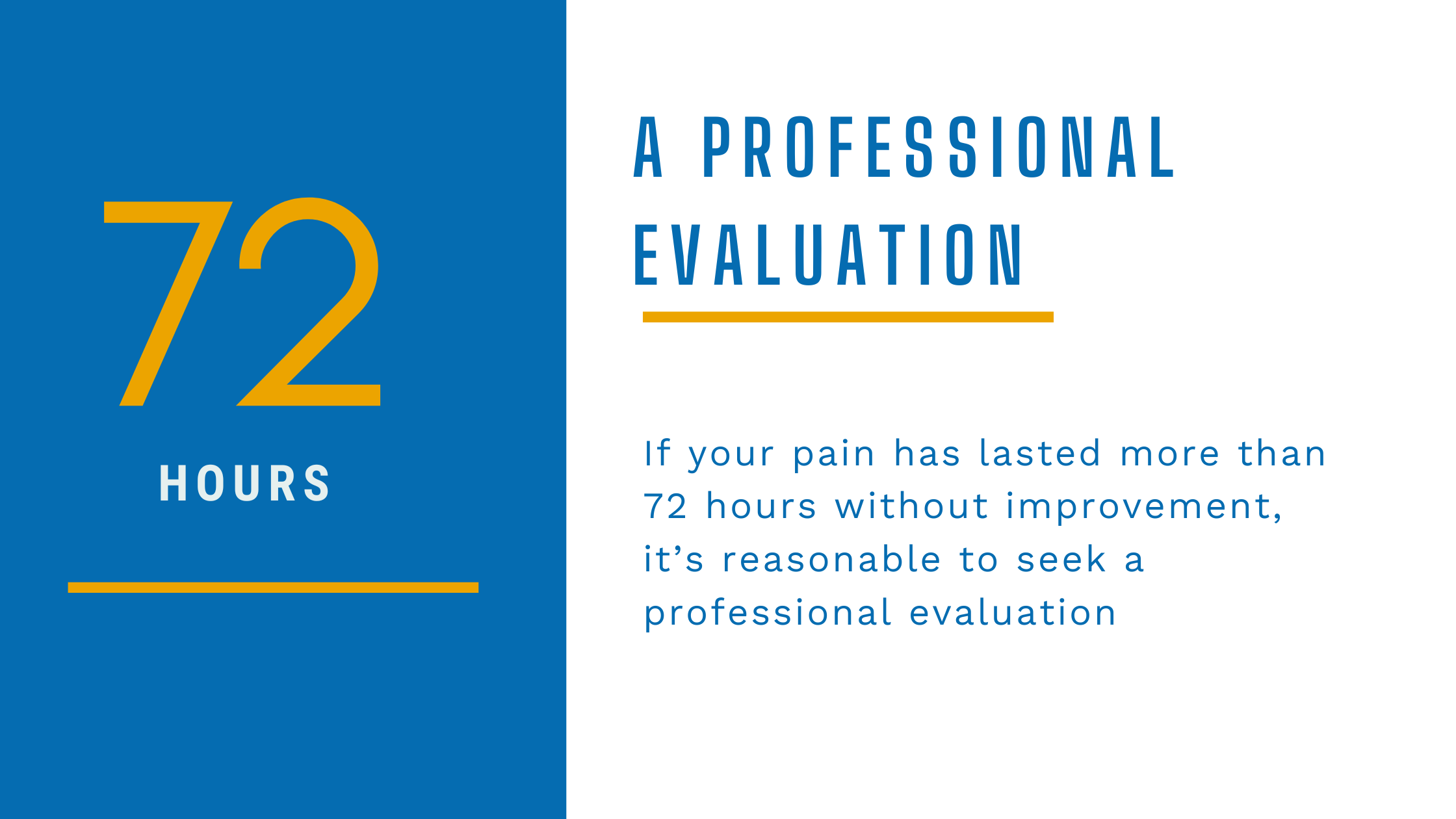
A soccer injury is serious enough to see a professional based on the 72-hour threshold.
If pain, swelling, or reduced range of motion hasn’t noticeably improved within three days of rest and basic home care, that’s a reasonable point to seek evaluation. Injuries that worsen with activity rather than improve, that feel unstable or give way under load, or that follow a collision or awkward landing deserve earlier attention.
Can a Chiropractor Treat Soccer Injuries: What the Research Shows
Chiropractic care can be used to treat some soccer injuries, but it’s always advisable to get a proper evaluation or seek consultation first.
Research published in the Journal of Manipulative and Physiological Therapeutics found that athletes who received chiropractic care, including spinal manipulation and soft tissue therapies, showed significantly better outcomes in pain, range of motion, and function compared to those who did not.
However, it’s worth noting the study was limited to ankle sprains and hamstring strains, which carry a high re-injury rate when undertreated.
An injury that feels minor at week one can become a chronic complaint by week six if the underlying joint and tissue mechanics aren’t properly addressed.
Another peer-reviewed study published in PMC confirmed that chiropractic interventions, spinal manipulation and soft tissue therapies, are effective in treating muscle strains and joint sprains, and contribute to improved joint mobility and neuromuscular coordination.
For soccer players, that combination addresses both the immediate injury and the biomechanical patterns that contribute to re-injury over time.
At Advanced Spine & Sports Care, Dr. Jason Ingham holds a Certified Chiropractic Sports Physician (CCSP) credential; a post-doctoral sports medicine designation that reflects specialized training in athletic injury assessment. Sports-specific expertise matters when the difference between a grade 1 and grade 2 strain changes the entire recovery approach.
Tips to Prevent Soccer Injuries
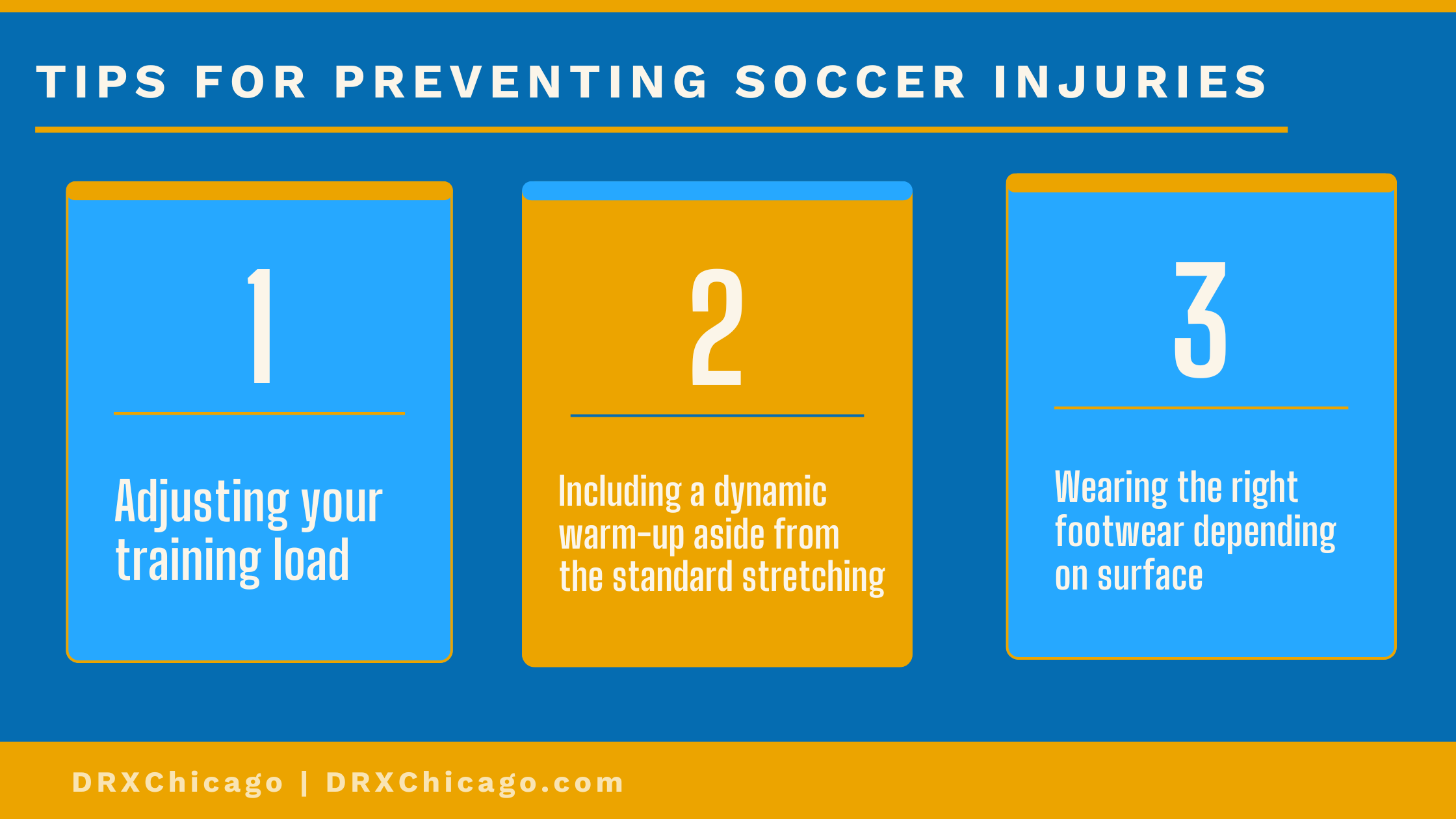
Adjusting your training load, wearing the right footwear, and dynamic warm-ups are three key prevention strategies for soccer injuries:
- Training load. Hamstring strains and shin splints are frequently the result of a sudden jump in intensity after a period of reduced activity. Chicago’s weather-driven seasons mean many rec league players move from limited winter training to full outdoor games in a matter of weeks, which produces predictable early-season injuries. Building back gradually through the first few weeks of any new season significantly reduces that risk.
- Footwear. Always worth a second look if you’re playing on artificial turf. Most Chicago rec league fields run on synthetic surfaces. Standard grass cleats can affect ankle mechanics differently on turf, and switching to turf-specific footwear is a straightforward step that often gets overlooked.
- Dynamic warm-up. Leg swings, hip circles, light jogging, and activation drills prepare the joints and muscles for what the game demands in a way that static stretching alone does not. Most sports medicine guidelines recommend at least 10 minutes of progressive movement before high-intensity play.
How Sports Chiropractic Care Supports Soccer Players in Chicago
Chiropractic care plays a role in preventing injuries. Regular assessment of joint alignment, muscle function, and movement patterns can catch compensation habits before they become full problems, especially for players competing week after week throughout a season.
Advanced Spine & Sports Care is located on Clark and Diversey in Chicago’s Lakeview neighborhood, close to the Lincoln Park and Lakeview fields where many Chicago-area leagues play through spring and summer.
Dr. Ingham and Dr. Erin Schey treat athletes at every level, from competitive players to weekend warriors, offering chiropractic care and sports injury rehabilitation, physical therapy, and massage therapy.
If you’re dealing with an injury from this season or want to stay ahead of one, scheduling a consultation is a straightforward first step.
Last Updated on May 15, 2026 by Chiropractor Dr. Jason Ingham DC, CCSP